A while back I was brainstorming with a coworker, and we got the idea that a pressure sensor could be used to detect specific gravity of fermenting beer. This would solve a rather small problem, but potentially disastrous one, for a home brewer like myself. The issue is knowing when your beer is… beer. Usually before you put your wort (Literally unfinished beer) away you take a gravity reading. This reading tells you the amount of stuff (Mainly sugar) that is held in suspension in the wort. Then you put some yeast in the wort, close it up, and wait for the yeast to consume the sugar that was suspended in your wort.
Knowing when that has happened can be a tricky business, especially with a type of yeast or beer style you have never made before. Temperature and acidity can play a big role in this process too, so figuring it out is important. Sadly, the only way most home brewers have to tell when the yeast has done its job is to take another specific gravity reading. This involves sanitizing your equipment, opening your fermenting vessel and either getting a sample or dropping your sanitized meter into the wort. If your wort was not finished, or worse yet, hadn’t even started, you risk introducing a foreign contaminant at this point.
So, the idea is you could build an apparatus that would sit in your wort, and give you a constant specific gravity reading. This would involve two different length tubes, and a sensor that could tell you the pressure difference between those tubes. These sensors exist, and are readily available, so why not give it a try? After a bit of digging around I found Mouser part number 987-SM5852015WD3LR and decided to try it.
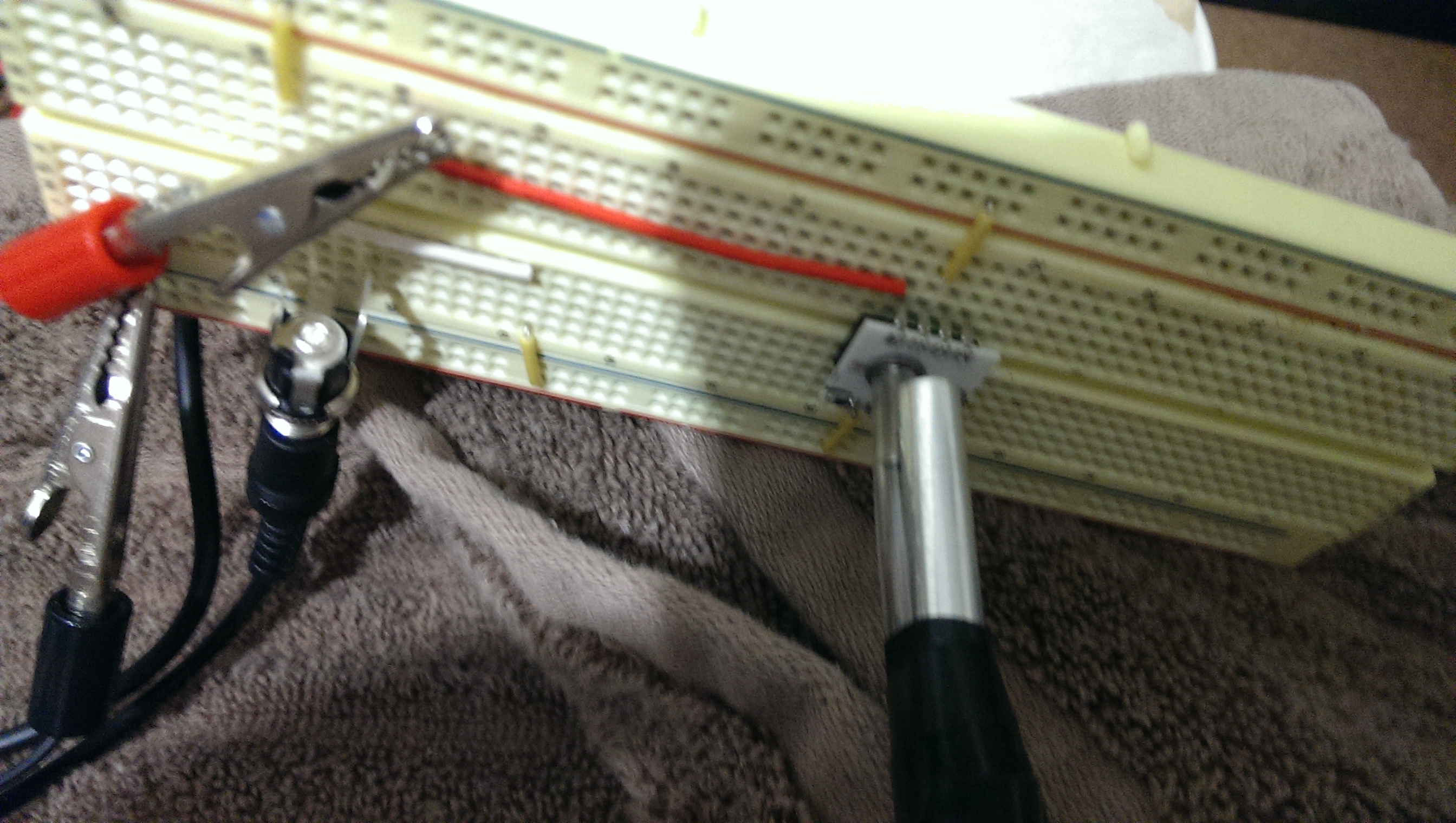
The sensor on my bread board with the tubes attached.
After getting everything on my breadboard, and hooking the analog output of the sensor to my volt meter I dropped it into a 5 gallon bucket of pure water. I also took a reading off of my tried and true specific gravity meter. My specific gravity meter read 1.00 (What it should in water), and the pressure sensor was throwing .3 volts at my voltmeter. This was the first sign that this might not work. With the sensor already reading .3 volts it meant it was already close too its maximum reading.
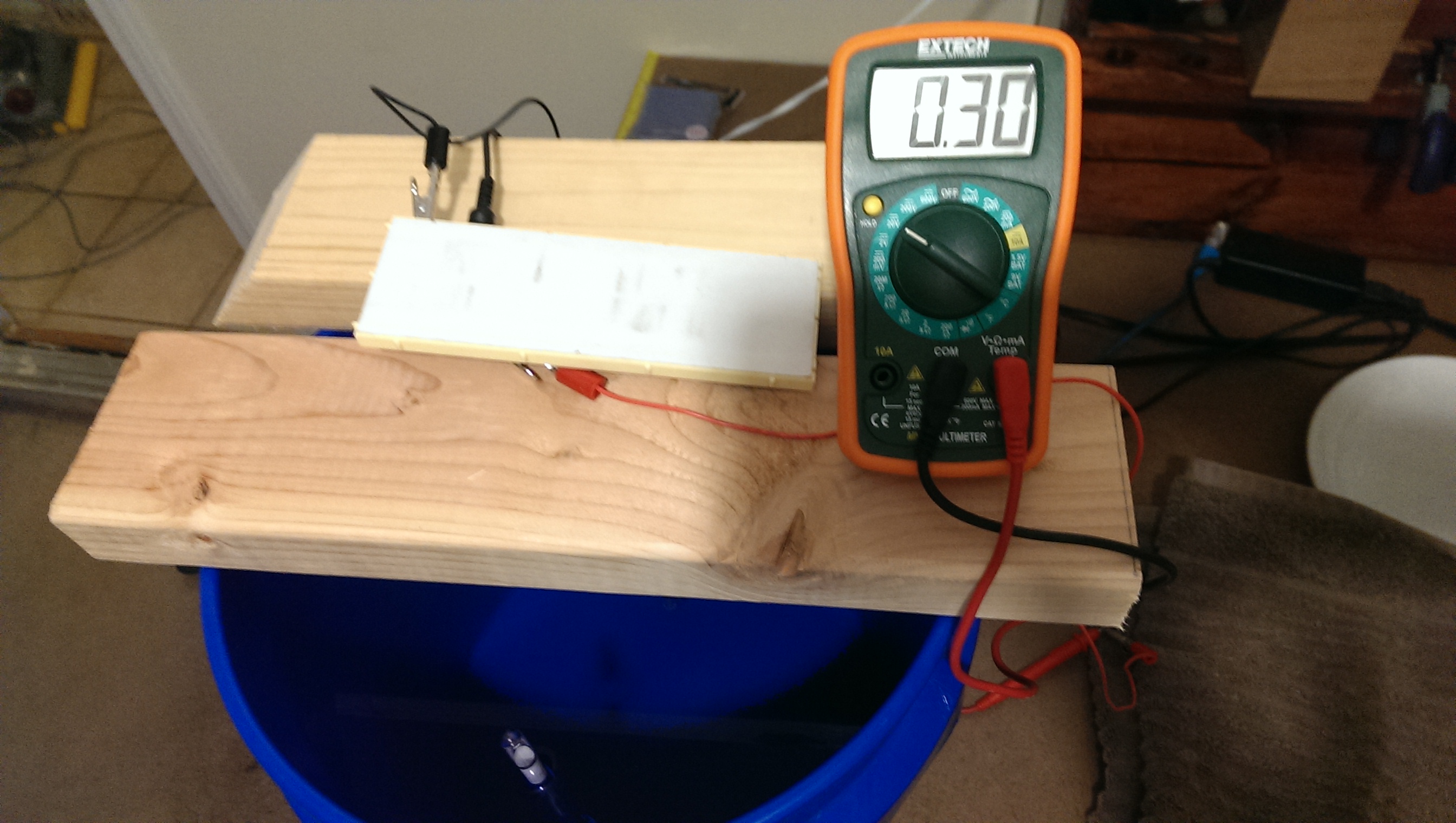
Pressure sensing apparatus attached to voltmeter and submerged into water.
I then added 5 pounds of sugar, mixed until it was suspended in the water, and took another reading with my specific gravity meter. This time it read 1.44, which is not to far from what an actual fresh wort reading might be. Then I put in the pressure sensor, and got the exact same result. .3 volts. So, I proved at least that this sensor is not sensitive enough for what I was trying to do.
Perhaps there is a sensor out there sensitive enough for this type of measurement. If you hear about one let me know, and I’ll keep looking. Until that sensor comes along, I might try some experiments with testing the wort’s capacitance … This might prove more fruitful than the pressure sensor. If you have another idea, please be sure to let me know.